E.S.A.BELL
A need left unanswered, taken over and designed end to end to alert technicians when someone walks into an IT service desk, and to measure footfall, without drilling a single hole.
- Development
- Infrastructure & networking
- Cybersecurity
Context
At a large Orange site near Bordeaux, the on-site technicians opened an IT service desk where several hundred employees can come for help. Nobody can staff it full time. The team needed to know when someone was waiting, and how many people came each week to adjust opening hours.
The problem
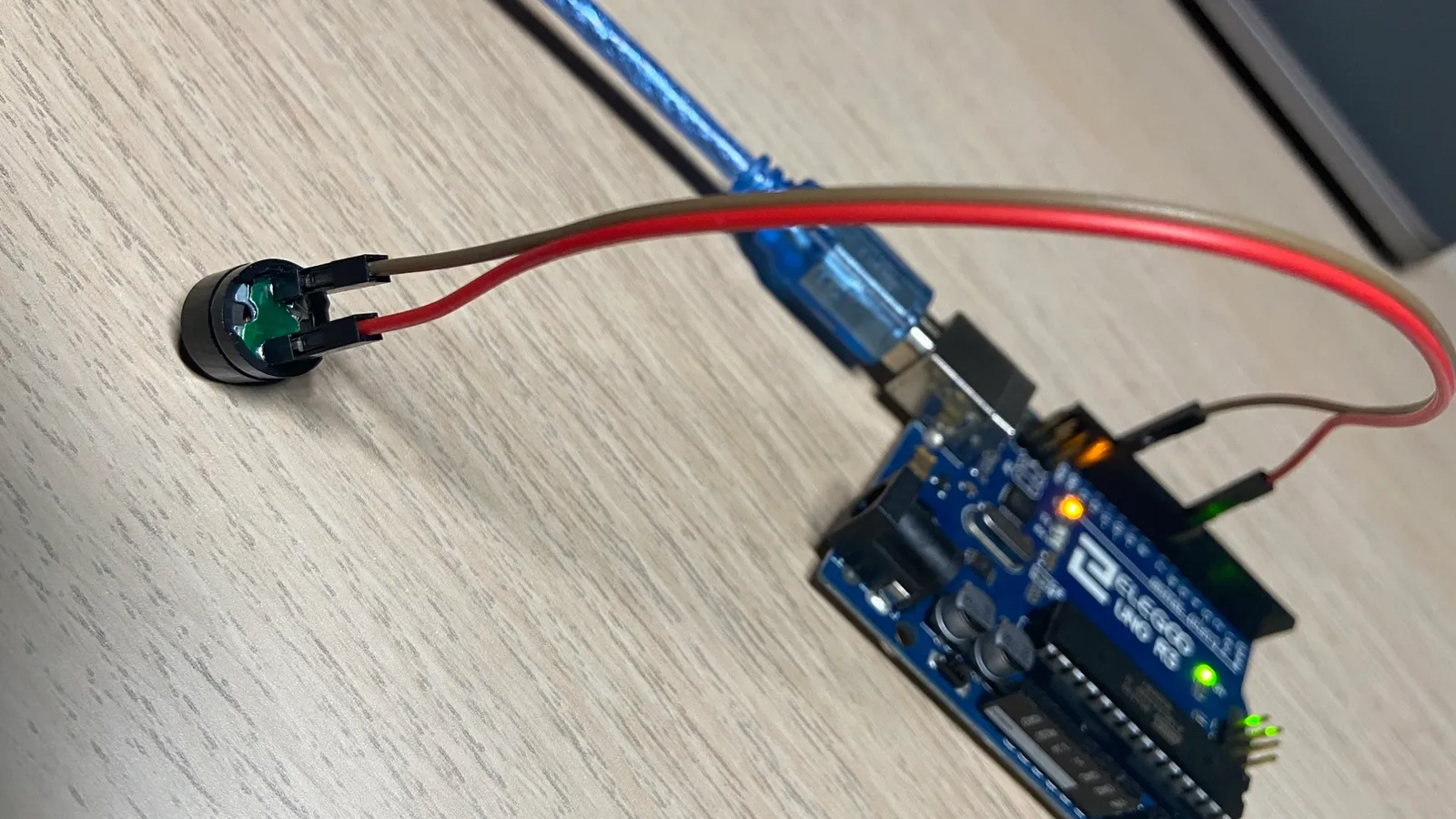
A first attempt had been dropped, with no usable code and no documentation: I started from a blank page, with my own design. The hardware was imposed: an Arduino board with an infrared sensor, two ESP32 boards, a buzzer and an LED strip. And the client had one constraint: everything had to talk over Wi-Fi, without drilling into the walls.
What I did
- I analysed the hardware and its physical limits, such as very dark clothing absorbing infrared light, then agreed with the client on which sensor to keep.
- I built the web servers on the ESP32 boards, which trigger the buzzer and the LED strip, and the Python program that reads the sensor, sends alerts, logs every visit and emails a weekly summary.
- I delivered nine extra requests along the way: a graphical interface, a simulation mode, test tools, automatic ESP32 reconnection, start-up prerequisite checks, protection of sensitive data, an installer for a blank Windows machine, and 3D-printed cases made with a professional.
- I wrote the documentation and an acceptance test plan, and trained the users.
The result
An installed, documented system that alerts technicians and produces footfall figures automatically. About 150 hours of work, presented for the E6 exam of my BTS CIEL and graded 17/20.
What I took away
Picking up a need left unanswered means first understanding what you have in hand, then holding course as requests pile up. The planning done at the start is what made every addition manageable.